 RxSwift Reference
 RxSwift: ReactiveX for Swift




Xcode 7.3 Swift 2.2 required
About Rx
Rx is a generic abstraction of computation expressed through Observable<Element> interface.
This is a Swift version of Rx.
It tries to port as many concepts from the original version as possible, but some concepts were adapted for more pleasant and performant integration with iOS/OSX environment.
Cross platform documentation can be found on ReactiveX.io.
Like the original Rx, its intention is to enable easy composition of asynchronous operations and event/data streams.
KVO observing, async operations and streams are all unified under abstraction of sequence. This is the reason why Rx is so simple, elegant and powerful.
I came here because I want to …
… understand
- why use rx?
- the basics, getting started with RxSwift
- units - what is
Driver,ControlProperty, andVariable… and why do they exist? - testing
- tips and common errors
- debugging
- the math behind Rx
- what are hot and cold observable sequences?
- what does the the public API look like?
… install
- Integrate RxSwift/RxCocoa with my app. Installation Guide
… hack around
- with the example app. Running Example App
- with operators in playgrounds. Playgrounds
… interact
- All of this is great, but it would be nice to talk with other people using RxSwift and exchange experiences.
 Join Slack Channel
 - Report a problem using the library. Open an Issue With Bug Template
- Request a new feature. Open an Issue With Feature Request Template
… compare
… find compatible
- libraries from RxSwiftCommunity.
- Pods using RxSwift.
… see the broader vision
- Does this exist for Android? RxJava
- Where is all of this going, what is the future, what about reactive architectures, how do you design entire apps this way? Cycle.js - this is javascript, but RxJS is javascript version of Rx.
Usage
| Here’s an example | In Action |
|---|---|
| Define search for GitHub repositories … | 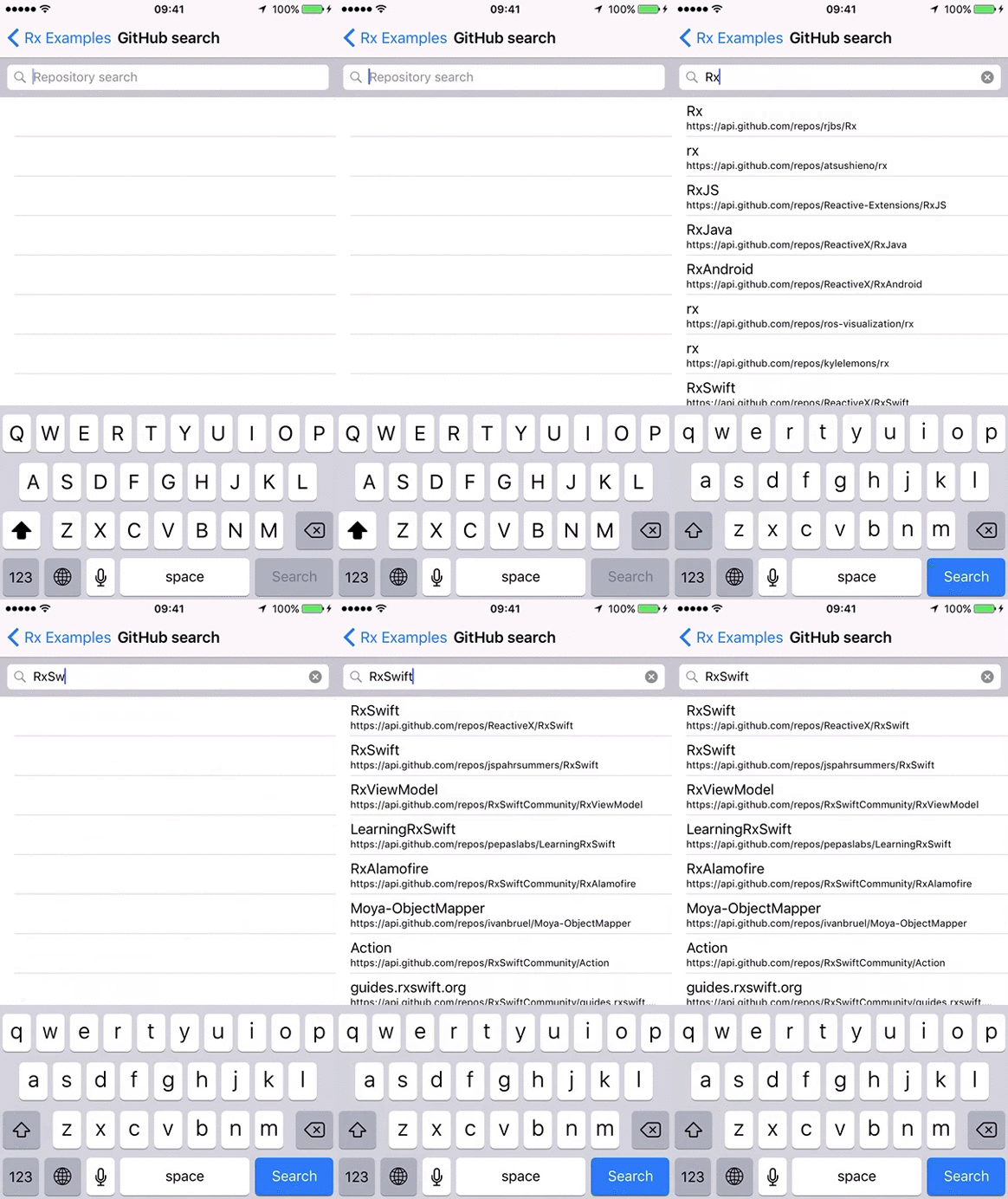 |
let searchResults = searchBar.rx_text
    .throttle(0.3, scheduler: MainScheduler.instance)
    .distinctUntilChanged()
    .flatMapLatest { query -> Observable<[Repository]> in
        if query.isEmpty {
            return Observable.just([])
        }

        return searchGitHub(query)
            .catchErrorJustReturn([])
    }
.observeOn(MainScheduler.instance) |
|
| … then bind the results to your tableview | |
searchResults
    .bindTo(tableView.rx_itemsWithCellIdentifier("Cell")) {
        (index, repository: Repository, cell) in
        cell.textLabel?.text = repository.name
        cell.detailTextLabel?.text = repository.url
    }
.addDisposableTo(disposeBag) |
Installation
Rx doesn’t contain any external dependencies.
These are currently the supported options:
Manual
Open Rx.xcworkspace, choose RxExample and hit run. This method will build everything and run the sample app
CocoaPods
:warning: IMPORTANT! For tvOS support, CocoaPods 0.39 is required. :warning:
# Podfile
use_frameworks!

target 'YOUR_TARGET_NAME' do
    pod 'RxSwift',    '~> 2.0'
    pod 'RxCocoa',    '~> 2.0'
end

# RxTests and RxBlocking make the most sense in the context of unit/integration tests
target 'YOUR_TESTING_TARGET' do
    pod 'RxBlocking', '~> 2.0'
    pod 'RxTests',    '~> 2.0'
end
Replace YOUR_TARGET_NAME and then, in the Podfile directory, type:
$ pod install
Carthage
Xcode 7.1 required
Add this to Cartfile
github "ReactiveX/RxSwift" ~> 2.0
$ carthage update
Manually using git submodules
- Add RxSwift as a submodule
$ git submodule add git@github.com:ReactiveX/RxSwift.git
- Drag
Rx.xcodeprojinto Project Navigator - Go to
Project > Targets > Build Phases > Link Binary With Libraries, click+and selectRxSwift-[Platform]andRxCocoa-[Platform]targets
References
- http://reactivex.io/
- Reactive Extensions GitHub (GitHub)
- Erik Meijer (Wikipedia)
- Expert to Expert: Brian Beckman and Erik Meijer - Inside the .NET Reactive Framework (Rx) (video)
- Reactive Programming Overview (Jafar Husain from Netflix)
- Subject/Observer is Dual to Iterator (paper)
- Rx standard sequence operators visualized (visualization tool)
- Haskell